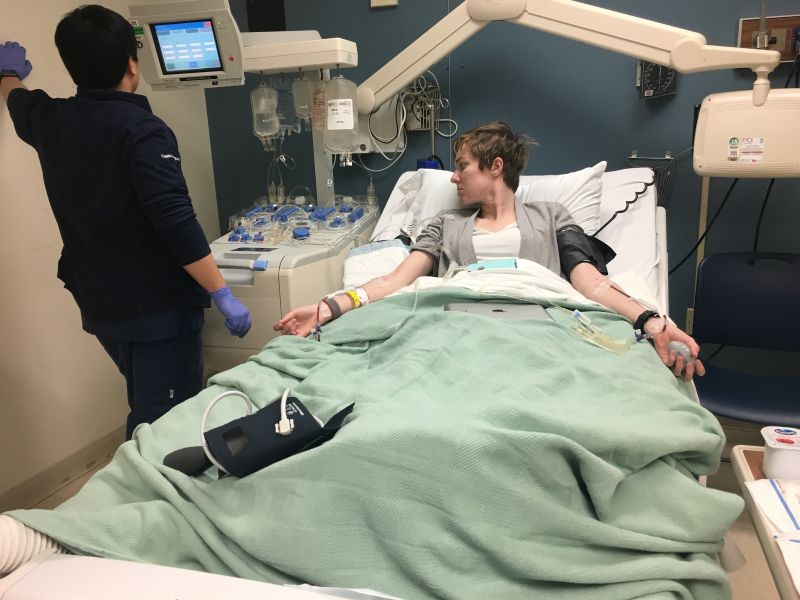
Alison Sbrana, a disability activist and patient advocate living with Myalgic Encephalomyelitis, participated in an National Institutes of Health study looking at the effects of long COVID early in the pandemic. The long-term symptoms of ME and long COVID can be largely similar, giving researchers hope that previous ME work can inform treatments for people living with long COVID.
After three years of leading a long COVID patient advocacy group and speaking out for those living with the condition, Alison was invited to participate in Project ECHO* as a lived experience expert. Alison admits she was initially skeptical but was quickly overwhelmed by the reception she received.

Alison Sbrana of Fort Collins, CO. Photo Credit: Mariah Weir Photography, July 2023.
“I thought ‘wow.’ They really respect patients and our perspective,” says Alison, a resident of Fort Collins, CO. “Patients have a lot of wisdom. It’s our daily life.”
Alison noted that the ECHO allowed her to openly share what it’s like living with ME, including frustrating interactions with providers, and dealing with near constant fatigue. And after 11 years of living with her disability, Alison said her work on long COVID makes her hopeful.
“We need to have people’s needs met better and sooner. This work has been very meaningful for me. This program has the power to open doors,” Alison says. “The pandemic is over, but long COVID is not. While the research on long COVID continues, the day-to-day is happening now.”
She added that although research takes time, Project ECHO is doing the work of sharing “just-in-time” information about long COVID today.
“Patients’ needs were being ignored for so long,” says Alison. “We have a goldmine of knowledge to share.”
A Shift Happening
As a medical anthropologist, Cali Wilson never expected her training to be so instrumental in helping her bridge from medical professional to patient. In early 2020, Cali became disabled with long COVID. She admits that even with her medical background, she was in uncharted water.
“Most people, including me, had no idea what was going on,” says Cali. “All I knew was that I was devastatingly ill, and on the brink of death more than once, with providers refusing to believe how sick I really was.”
Cali, who lives in Salt Lake City, Utah, shared that just like other people trying to manage long COVID, she turned to the internet to figure out what was going on. She found a long COVID support group, Body Politic, which housed the world’s first worldwide COVID-19 support group. From there, leaders at Project ECHO reached out to her.
Cali’s experience, though, taught her that patients were often not listened to, which made her hesitant to participate. But once she got involved, Cali says it was refreshing to see how much Project ECHO leaders valued the time and perspective of people living with long COVID.
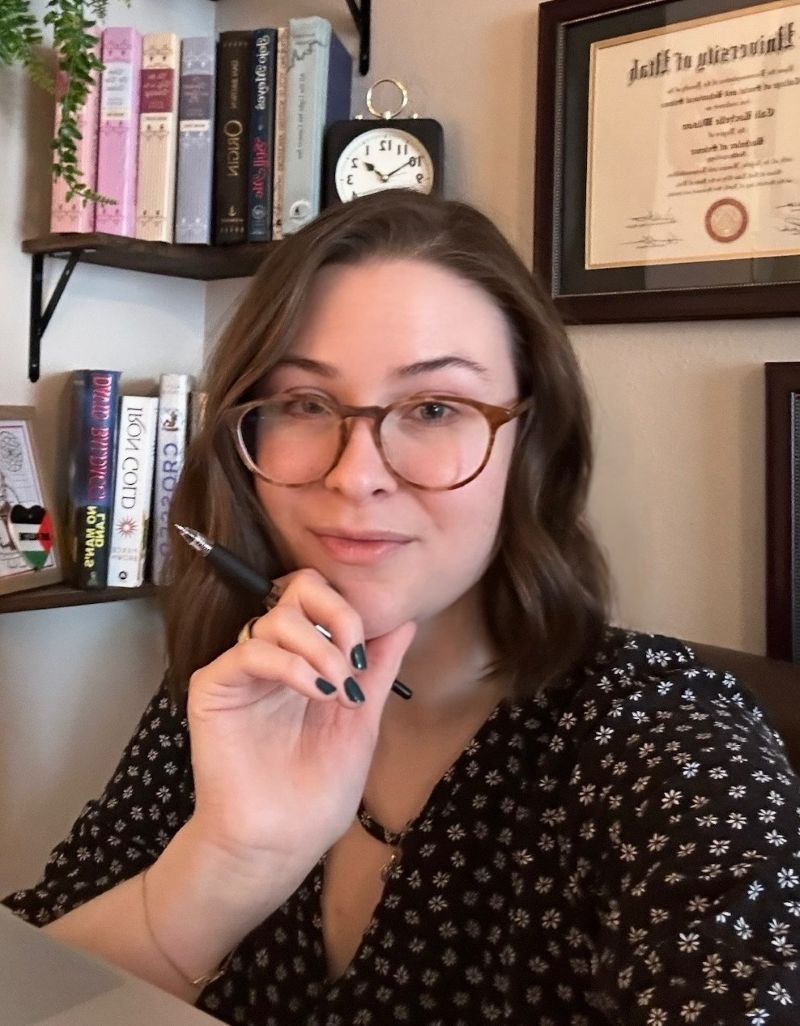
Cali Wilson of Salt Lake City, Utah.
“This was the first space where I felt valued and respected as a patient.”
Cali hopes to one day see long COVID training as a requirement for provider certification. This sort of embedded requirement will help move the initiative one step closer to achieving SILC’s goal, a world without long COVID.
“There is a cultural shift happening, with increased discussions of long COVID,” says Cali. “It’s slow, but it is happening. That gives me hope.”
With her anthropological background, Cali’s perspective also extends to that of patients and providers from different backgrounds. She noted that in a recent ECHO session a caregiver from Zambia chimed in, thanking the organizers for hosting a late-night presentation that they could attend from their time zone.
“So many people have different skillsets that they can bring to the table to help figure out what’s going on with long COVID,” said Cali. “You need a researcher, you need folks in labs, you need people in marginalized communities who know what’s happening on the ground. Through the SILC-ECHO partnership I feel like, yeah, we’re going to figure this thing out.”
This story is a companion piece to “SILC and ECHO: Improving Clinical Care for Long COVID Patients.”
*The Project ECHO Program was called the Long COVID and Fatiguing Illnesses Recovery Program and was supported by the Centers for Disease Control and Prevention.
Thank you to the Schmidt Initiative for Long Covid for its generous support of this initiative.
Featured image: Alison Sbrana, a disability activist and patient advocate living with Myalgic Encephalomyelitis, participated in an National Institutes of Health study looking at the effects of long COVID early in the pandemic. Photo Credit: Cathy Sale, January 2019.