Yet, more than two years after that declaration, an estimated 400 million people continue to suffer from long COVID, a complex and diverse illness that remains a health care challenge for patients and providers alike.
WHO describes long COVID – also known as Post COVID-19 condition – as a condition with medium- to long-term effects on one or more body systems, including fatigue, breathlessness, muscle or joint pain, and impaired sleep. Specific symptoms and severity vary by person, and the current lack of a specific biomarker or diagnostic test, makes the condition both difficult to diagnose and to treat.
Partnership in Practice
The sheer number of patient cases worldwide along with the enormous economic toll—estimated at $1 trillion per year—is why the Schmidt Initiative for Long Covid was created. Founded in 2023, SILC works to support long COVID research and educate providers worldwide on the latest developments in long Covid diagnosis, share the latest in treatment and research, and bring forward the experience of patients battling the disease. Through a partnership with Project ECHO, the initiative’s first grantee, SILC is expanding its reach by leveraging ECHO’s model of telementoring for continuing education and collaboration.
In 2025, more than 3,864 attendees across 128 countries participated in the monthly long COVID global webinars. The monthly virtual learning sessions take place on two days, at different times, to accommodate people in different times zones, and include interpretation in Arabic, French, Portuguese and Spanish. Together, SILC and Project ECHO bridge global divides between primary care and specialists, and patients and providers. One such provider is Dr. Alba Azola.
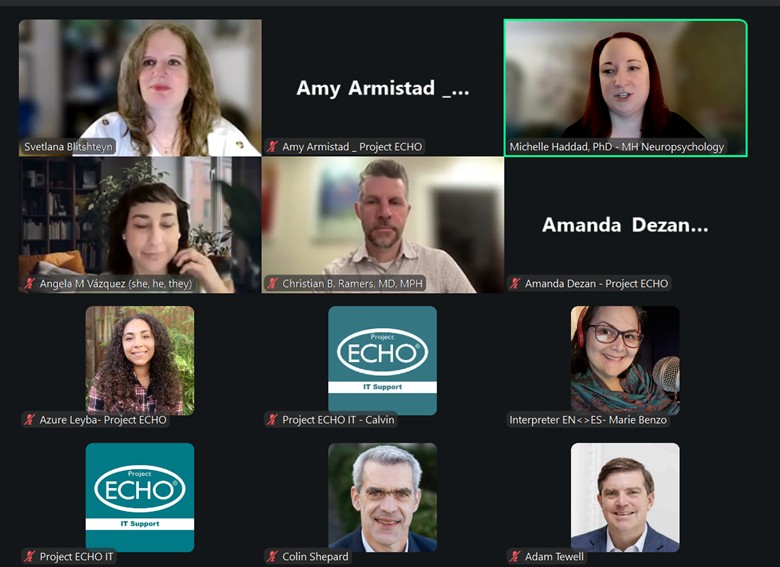
Providers and patients with lived experience participate in the Long COVID and Fatiguing Illness Recovery ECHO Program. Photo Credit: Michelle Haddad, Ph.D., December 2025.
Exchanging Knowledge
Dr. Azola, assistant professor and director of the Chronic Fatigue Syndrome and Related Disorder Program at Johns Hopkins University School of Medicine, is a long COVID rehabilitation specialist, and has been one of the earliest practitioners working to treat the condition.
Being a participant and faculty member of the Long COVID and Fatiguing Illness Recovery ECHO Program* meant Dr. Azola was involved in weekly virtual discussions that included best practices for myriads of patients – those seeing a host of specialists from gastroenterologists and cardiologists to neurologists. Dr. Azola’s team in Baltimore was able to use learnings from the ECHO sessions to order the most effective tests.
“Patients were presenting with multi-systemic issues, and people didn’t know exactly how to tackle it, so they ended up being referred to multiple places with tests that weren’t necessary,” says Dr. Azola. “We would share, ‘don’t order this cardiac MRI on everybody. It’s not high yield. These are the patients that were we’ve found that it’s important for’, and then we would explain that to our teams.”
The collaborative helped leaders learn what was most feasible in primary care and for at-risk communities that didn’t have regular access to care or medication, says Dr. Azola, adding that being able to tap colleagues at Hopkins for information, as well as partnering with other clinicians from around the world, was both invigorating and eye opening.
“It took me out of my bubble, and that was beautiful,” she says. “It’s been an exciting time as a physician, especially helping other physicians, sharing what we were seeing and collectively processing new developments.”
What providers also learned as part of the Long COVID ECHO was that the toll of long COVID doesn’t end at the physical impact. In fact, the neurological aspects of the condition can be just as debilitating, if not more.
The Power of Connection
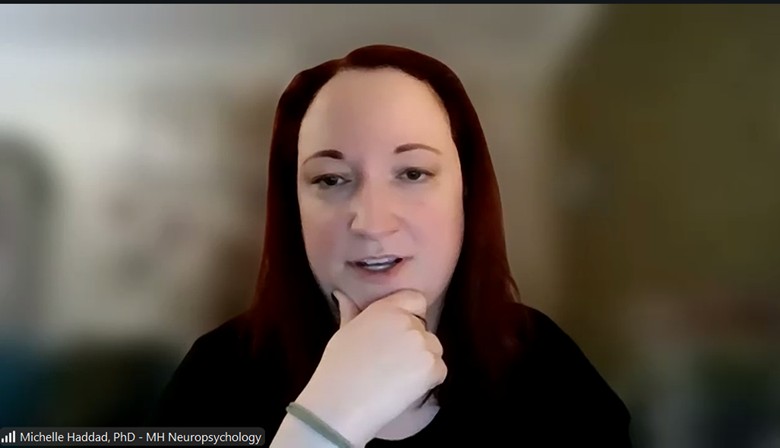
Michelle Haddad, Ph.D., a licensed neuropsychologist based in Atlanta, GA, said that providers often dismiss the concerns of people living with long COVID as being psychosomatic, or “just in their heads.” But their symptoms—including brain fog, attention problems, or memory loss—are very real, and impacting millions of people.
“Long COVID can be random, but we were seeing commonalities among patients,” says Haddad. “These symptoms are not just in people’s heads. These are real. Being a part of ECHO helped us connect as providers and share the experiences of the patients we were seeing.”
Haddad says that Project ECHO not only helped her professionally, but it also “saved my life.” That’s because in the early days of the pandemic, with in-person interaction limited or even nonexistent, losing contact with friends and colleagues became all too common. That was certainly the case for Dr. Haddad.
“My department was a ghost town. But with Project ECHO, I was now a part of a national and international network.”
Now in private practice, Project ECHO introduced Haddad to amazing providers, and those with long COVID lived experiences. She said hearing the voices of long COVID patients was refreshing, and they often challenged the long-held notions of the care providers.
*The Long COVID and Fatiguing Illness Recovery ECHO Program was initially funded by the U.S. Centers for Disease Control and Prevention.
This story is a companion piece to “The Value of Lived Experience: Long COVID Patients Support Solutions.”
To learn more about the long COVID initiatives, email the program team.
Thank you to the Schmidt Initiative for Long Covid for its generous support of this initiative.
Featured Image: A screenshot of Michelle Haddad, Ph.D., a licensed neuropsychologist based in Atlanta, GA, participating in the Long COVID and Fatiguing Illness Recovery ECHO Program. Photo Credit: Haddad, December 2025.