

The Background: From High Child Mortality to Thriving Children
Ethiopia has made substantial progress on reducing child mortality rates. But the Ethiopian Pediatrics Society identified that there was still much work to be done to address persistent public health challenges.
The First Step: Using the ECHO Model
In 2020, the Ethiopian Pediatrics Society and the American Academy of Pediatrics set out to improve newborn care in Ethiopia. Using the ECHO Model, participants joined monthly virtual quality-improvement training and mentorship. The goal was to increase knowledge around quality improvement methods and test potential improvements to newborn care practices in the delivery room.
The Ethiopian Neonatal Quality Improvement (EN-QI) Project ran from 2021 through 2022 in eight delivery centers in Addis Ababa, selected by the Ethiopian Pediatrics Society.
The Focus: Low-Cost, High-Impact Solutions
For the inaugural QI project, the hospital staff chose to improve the timing of cord clamping, a low-cost intervention with the potential to make a significant impact.
Delayed clamping means the provider waits one to three minutes after birth to cut or clamp the umbilical cord in non-emergency situations.
This delay allows extra time for the blood in the cord and placenta to flow to the baby, decreasing the risk of anemia and boosting neurodevelopment as the baby grows.
“Delayed cord clamping was such a good project for them to pick, because it doesn’t require a lot of resources,” says neonatologist Sharla Rent, MD. She is a team leader at Duke Health, a leading academic health system based in North Carolina. “It literally is just a knowledge practice change so they didn’t need extra supplies or a lot of extra training and it [lent itself] to quicker implementation.”
After 12 ECHO sessions, combining expert lectures and case discussions by hospital-based QI coaches, all eight participating hospitals significantly improved the rate of providers using delayed cord clamping.
The Evidence: Peer-Reviewed Research Documents the Results
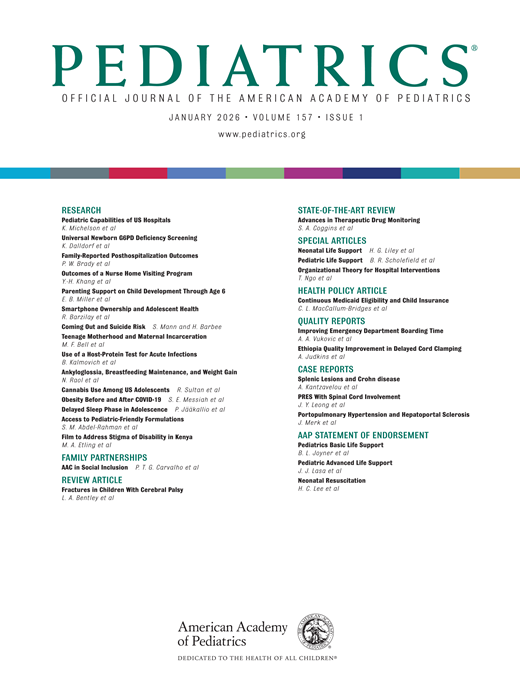
The initiative’s results have since been documented in the American Academy of Pediatrics’ peer-reviewed journal. In its January 2026 issue, Pediatrics published “Improving Rates of Delayed Cord Clamping in Ethiopian Hospitals: A Virtual Quality Collaborative.”
During the project:
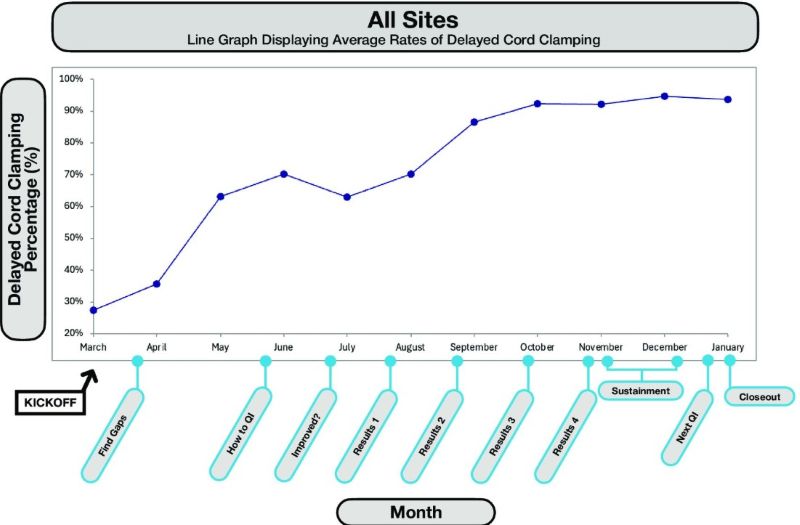
- Only 2 of 8 hospitals reached 90%+ compliance by project’s end.
- 6 of 8 sites started at or below 50%. By the end all eight sites were above 50%, and six had crossed 75%.
- The average delayed cord clamping rates improved from 28% to 90%.
- Aggregated across sites, the average time to cord clamping more than doubled (from 43.8 to 91.0 secs).
Credit: American Academy of Pediatrics’ peer-reviewed journal, Pediatrics, January 2026.
The findings show progress in delayed cord-clamping rates across the eight participating hospitals:
Start of Project – Delayed cord-clamping rates ranged from 7% to 72%––for a median initial delayed cord clamping rate of 33%.
End of Project – The combined delayed cord-clamping rate exceeded average rates of 90% across more than 3,500 observed deliveries This is a combined rate, not per individual hospital.
The Ethiopian Pediatrics Society promoted the findings in a recent LinkedIn post, highlighting how virtual, peer-led education can improve delayed cord clamping practices and help create a safer birth experience for mothers and babies.
Credit: AAP Global Health, the American Academy of Pediatrics’ global health initiative.
“When we finished with the cord-clamping project, [the hospitals] told us, ‘This is the culture in our unit now. [Cord-clamping knowledge] is no longer a challenge, no longer a gap,’” said Bogale Worku, MD, executive director of the Ethiopian Pediatrics Society. “I’m so happy we can move the same standards to remote areas where connections are available.”
The Impact: Turning Knowledge into Practice
The initiative also provided an opportunity to examine the ECHO Model itself. In its June 2026 issue, Springer Nature’s Journal of Perinatology published “A model for global health education through the Ethiopian newborn quality improvement ECHO initiative,” led by Dr. Rent. The study found that ECHO provided meaningful mentorship and career development and offered a low-cost, high-value approach to global health education.
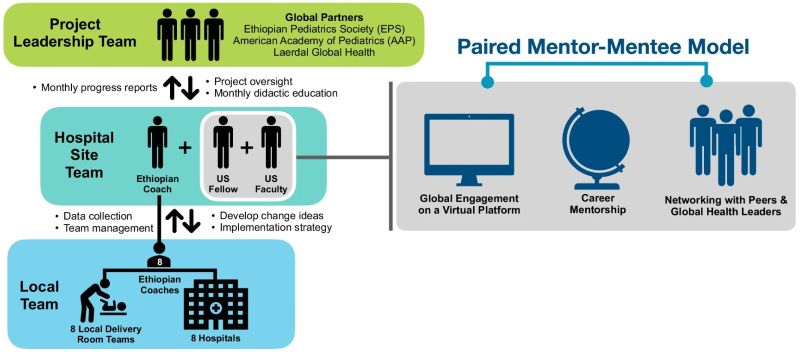
Credit: “Figure 1. Structure of EN-QI ECHO Project,” Journal of Perinatology, June 2026.
Learn More: Additional Resources
Get Involved with Project ECHO
Other ECHO programs covering a range of healthcare topics in Ethiopia are currently ongoing. Register to participate through iECHO.
Review the Research
“Improving Rates of Delayed Cord Clamping in Ethiopian Hospitals: A Virtual Quality Collaborative,” published in the January 2026 issue of Pediatrics.
“A model for global health education through the Ethiopian newborn quality improvement ECHO initiative,” published in the June 2026 issue of the Journal of Perinatology.
Watch the Video
Project ECHO: Ethiopia Umbilical Cord Clamping / The Audacious Project
Project ECHO would like to thank the participants in this story:
- Bogale Worku, MD, Executive Director, Ethiopian Pediatrics Society
- Shannon Limjuco, MPH, Director of Telehealth and ECHO Initiatives, American Academy of Pediatrics
- Sharla Rent, MD, FAAP, Neonatologist, Duke Health
Originally published in September 2022, this article was updated in September 2026 to include data outcomes and links to the research.
Featured image description: Two doctors in Ethiopia participate in a hospital quality improvement initiative focused on maternal and newborn care.