“Hágooshį́į́,” Alithea Gabrellas, MD, says to her patient in their native Dine language: “See you again someday.”
Dr. Gabrellas is an infectious disease doctor at the Gallup Indian Medical Center on the border of the Navajo Nation in Gallup, N.M. The Indian Health Service operates GIMC, a 99-bed facility with more than 250,000 outpatient visits and 5,800 inpatient admissions annually.
It is the closest healthcare facility for many Navajo Nation residents. Many patients struggle to find and afford transportation to get there, and they often face a one- to two-hour drive on rough, unpaved roads.
After they are finally able to see a doctor, imagine their disappointment when referred to a specialist based in Albuquerque 138 miles away, or in Flagstaff, Arizona – a 185-mile journey.
“We have a huge problem with distance and delays in care,” says Daniel Mays, MD, primary care physician at GIMC. “Some people don’t get access to the health care they need just because of where they live. People who live in rural areas are often sicker because they’re not getting the care that they need as soon as they need it.”
Project ECHO Expands Timely Care in Rural New Mexico
In 2013, Dr. Gabrellas was a primary care doctor in Fort Defiance, N.M.—a small rural community in the Navajo Nation—when she first heard of Project ECHO. The ECHO Model uses virtual mentorship to empower local providers to deliver best-practice care directly within their communities, reducing the need for long-distance travel while accelerating diagnosis and treatment. Through the Hepatitis C ECHO Program, Dr. Gabrellas quickly learned how to administer a brand-new, gold-standard class of drugs.
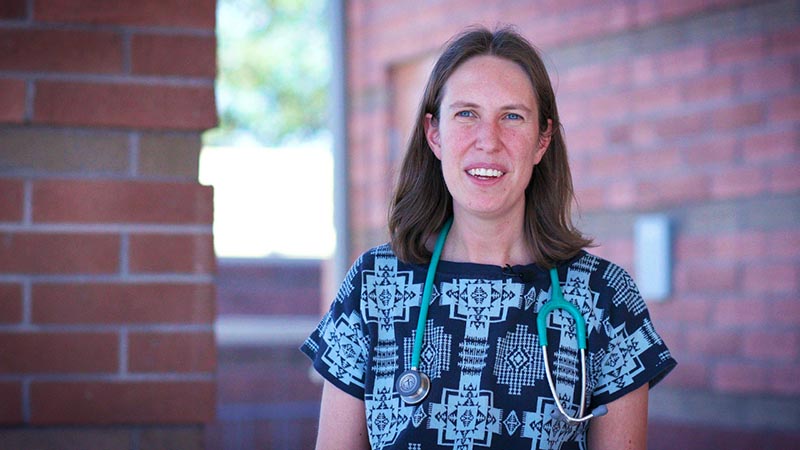
Thanks to ECHO, one of Dr. Gabrellas’ patients was able to avoid a liver transplant because their health improved drastically once their hepatitis C was treated.
Inspired by the way clinicians learn from medical rounds during residencies, ECHO participants present real, anonymized cases to specialists—and to each other—for discussion and recommendations. Primary care physicians can learn best practices in diabetes, cancer, HIV, and other disease areas, so their patients receive timely care where they live.
ECHO Bridges Health Care Gaps for Rural Communities
For Dr. Mays, ECHO gave him the confidence to prescribe complicated medications for rheumatoid arthritis that require intensive testing and monitoring. His patients benefited. They could receive treatment in Gallup instead of waiting months to see a specialist in a distant city.
“Project ECHO is the way for rural healthcare providers to gain practical skills and knowledge that can be applied to the patients they’re going to see tomorrow,” Dr. Mays says.“ECHO allows us to deliver a higher quality of care to patients and deliver services that those patients might not be able to get otherwise. That’s huge: that can save lives.”
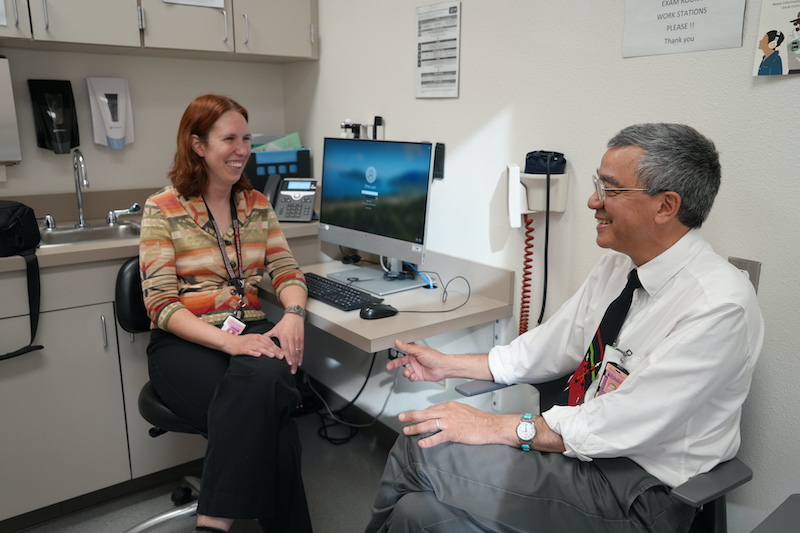
Featured Image: Dr. Alithea Gabrellas (left) sits with a colleague in a patient room at Gallup Indian Medical Center.
Originally published in August 2022, this story was updated in June 2026 to add authors, filters for search purposes, and to make healthcare one word in accordance with the recent AP Style update.