
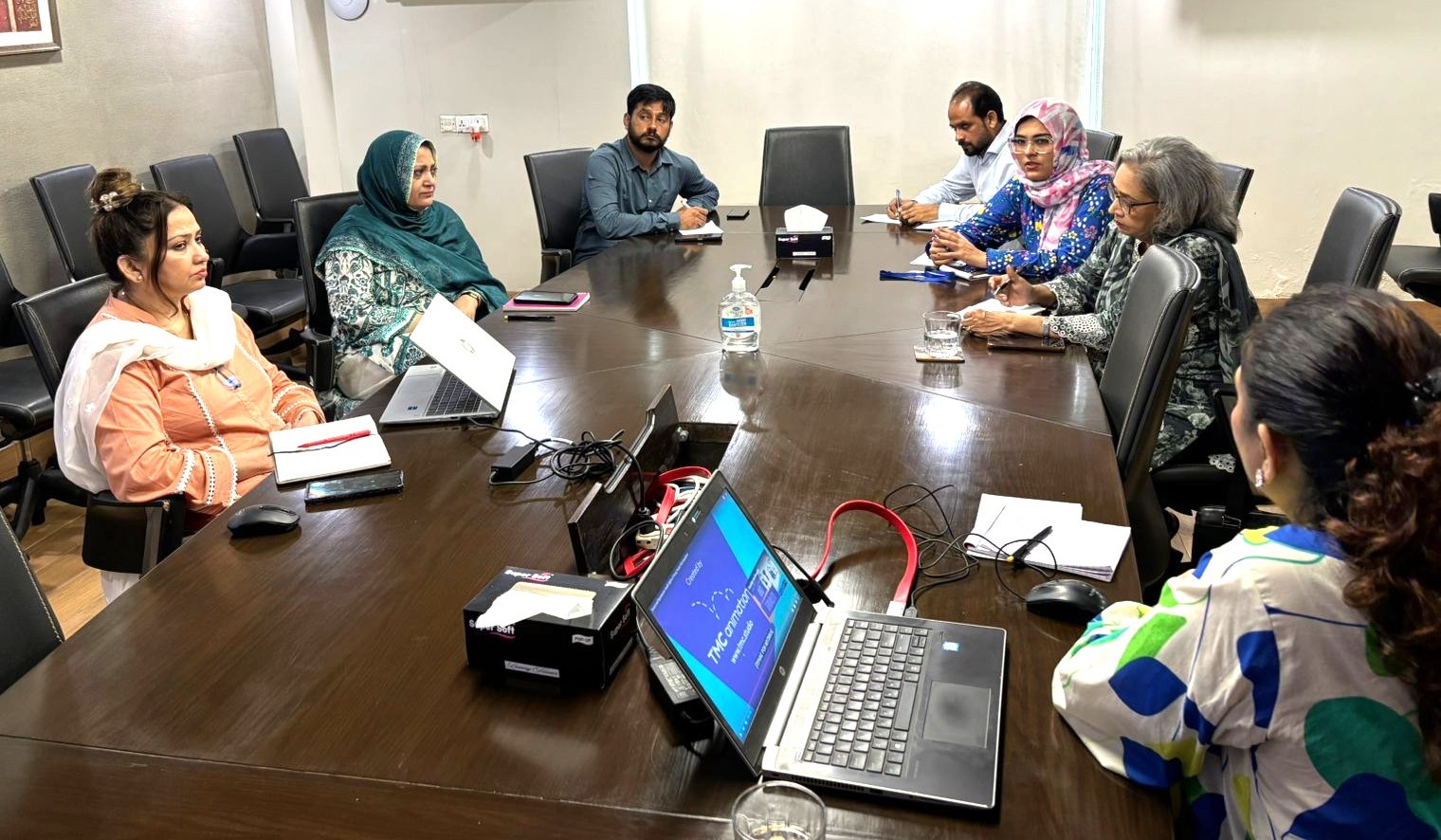
Challenge: Systemic Barriers to Reproductive Health for Persons with Disabilities
In Pakistan, more than 6% of the population lives with a disability. While the country’s 2020 Rights of Persons with Disabilities Act affirms general health rights, it lacks explicit recognition of sexual and reproductive health rights, leaving communities and healthcare providers inadequately informed and people with disabilities vulnerable to neglect and exploitation.
Actions: Disability Inclusive Sexual and Reproductive Health Training
Partnering with ASD Welfare Trust, in 2025, MSS Pakistan (formerly Marie Stopes Society) launched an ECHO Program focused on how to deliver safe, respectful and rights-based reproductive health care for people with autism and developmental disabilities. Through the virtual ECHO sessions, participants learned about abuse prevention, effective communication, dignity-centered care, informed consent, menstrual hygiene, personal boundaries, and puberty management.
In the ECHO sessions, MSS Pakistan used simplified language, visual aids and culturally relevant case studies to ensure accessibility and practical application across diverse audiences.
Outcomes: Measurable Impact on Sexual and Reproductive Health Awareness and Practice
The 772 participants included:
- Caregivers
- Healthcare professionals
- Parents
- Special education educators
- Therapists
For many participants, it was their first formal training on sexual and reproductive health for people with cognitive and communication disabilities. Participants engaged in open discussions on previously taboo topics—an important step toward de-stigmatizing health education— and they found the training highly relevant and valuable, Program Lead Shaista Ali noted, citing post-session feedback data.
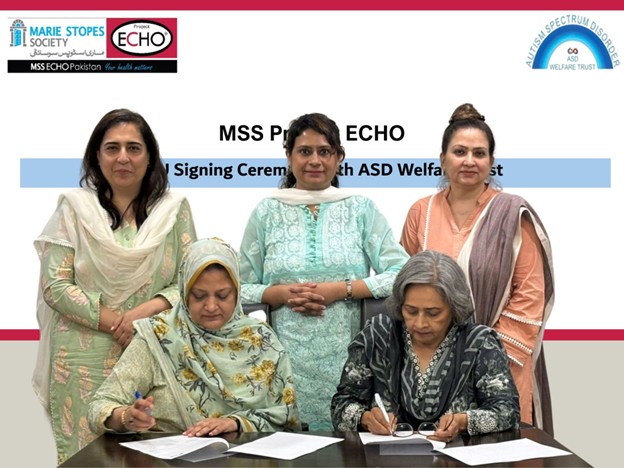
The Memorandum of Understanding signing ceremony: MSS Pakistan and Autism Spectrum Disorder Welfare Trust. Photo Credit: MSS Pakistan Marketing Team, May 2025
Key Takeaways: Identifying Policy and Systems-Level Gaps

Through its ECHO Program, MSS Pakistan identified several critical structural gaps limiting disability-inclusive reproductive healthcare:
- A nationwide shortage of institutions supporting early intervention for children with disabilities
- Inadequate provider training on intellectual and developmental disabilities
- Lack of content in the country’s Regional Training Institute curricula, and materials for frontline healthcare providers and special educators
- Lack of a formal policy framework mandating inclusion across health systems
Recommendations:
To address these gaps, MSS Pakistan recommends integrating a dedicated sexual and reproductive health module for persons with disabilities into Pakistan’s national family planning training curricula, with emphasis on disability rights, consent, safeguarding mechanisms and referral pathways.
Conclusion: Building an Inclusive Sexual and Reproductive Health System in Pakistan
Thanks to the success of the initial ECHO Program, in 2026, MSS Pakistan expanded its ECHO Programs to include:
- AMAZE ECHO Program: Age Appropriate Sexual and Reproductive Health Education
- From January until April, this nationwide capacity-building program used localized educational content to engage parents, caregivers, teachers, special educators and healthcare professionals to promote age-appropriate and inclusive sexual reproductive health education.
- Human Rights Based Approach in Reproductive Health, Family Planning, and Maternal, Newborn and Child Health Services ECHO Program in collaboration with the Government of Pakistan’s Health and Population Welfare Departments.
- Launched in June, this new ECHO Program builds capacity with healthcare providers and program managers to deliver equitable, rights-based, people-centered care.
The success of MSS Pakistan’s ECHO Program demonstrates a meaningful shift toward inclusive sexual and reproductive healthcare that recognizes the rights, autonomy and dignity of people with disabilities, says Ali, adding: beyond enhanced knowledge, the initiative fostered cultural change by legitimizing conversations around disability, sexuality and reproductive rights.
By addressing systemic barriers and advocating policy reform, MSS Pakistan is advancing a rights-based, inclusive healthcare model. This intervention lays a scalable foundation for transforming Pakistan’s reproductive health ecosystem into one that leaves no one behind.
For more information about this ECHO Program, email Shaista Ali, MSS Pakistan Project ECHO Program Lead.