
Opioid Use Disorder
Equipping frontline and primary care teams to address OUD



In New Mexico
Approximately 40,000 people
Are Living with Opioid Use Disorder
WHY
Does New Mexico have the seventh-highest overall drug overdose death rate in the U.S?
PROBLEM ONE
In 2019, 74% of all overdose deaths involved opioids in New Mexico.1
New Mexico Department of Health
ECHO IMPACT
Last year, 942 people participated in four opioid-related ECHO programs, helping to fill gaps in care throughout New Mexico.
PROBLEM TWO
In 2023, 65% of all overdose deaths in New Mexico involved fentanyl, which is particularly deadly.2
New Mexico Department of Health
ECHO IMPACT
Project ECHO’s Community Opioid Response Education program offers free virtual training on naloxone administration and harm reduction strategies for all New Mexico residents.
PROBLEM THREE
In the first two weeks after release, people leaving incarceration face a risk of fatal overdose that is 10 to 40 times higher than the general population.3
BMC Public Health
ECHO IMPACT
Project ECHO provides training and support for implementing medication-assisted treatment in county jails—designed to reduce overdose deaths and recidivism.
Tackling Opioids in New Mexico
2009
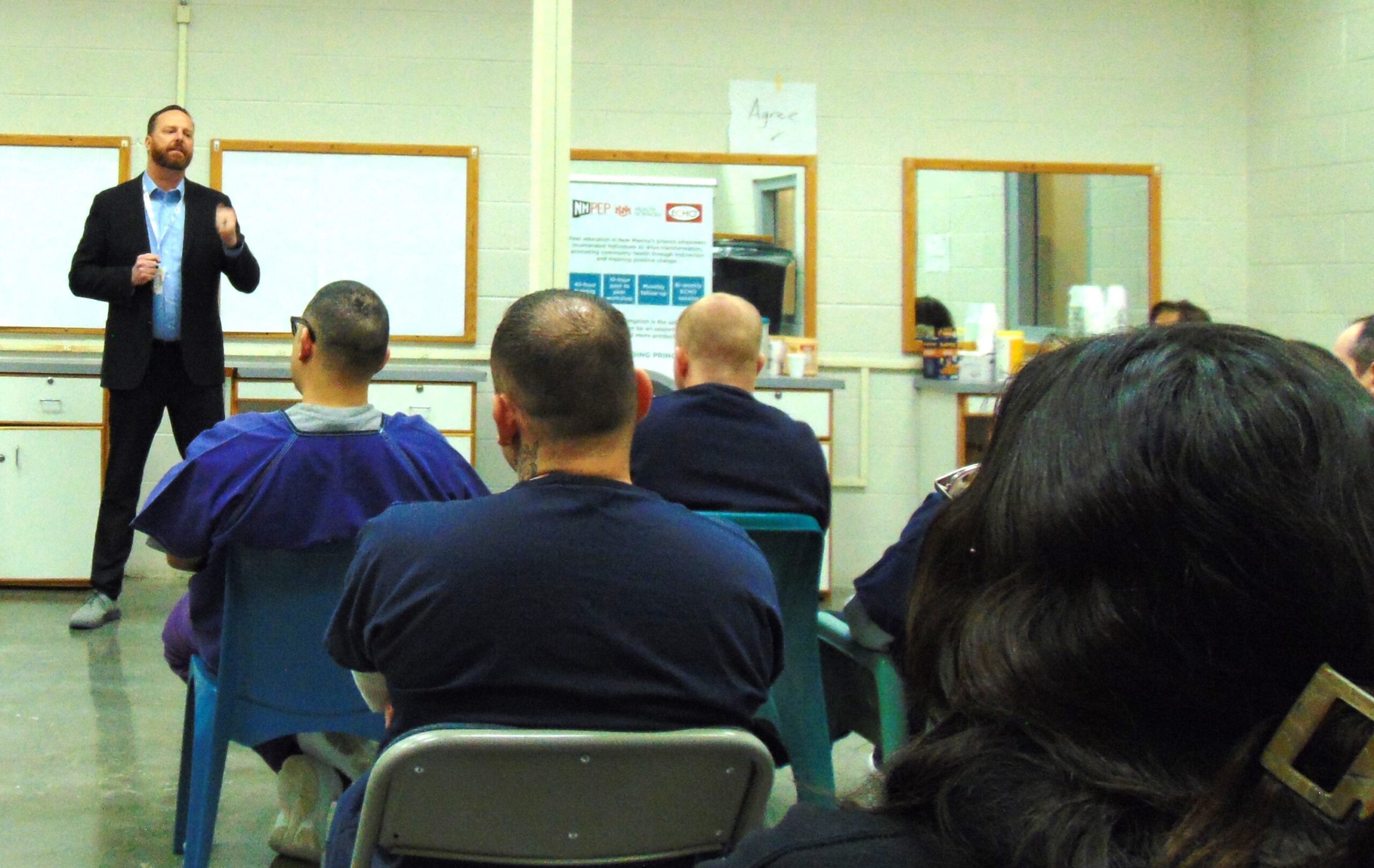
The New Mexico Peer Education Project launches in state prisons, training incarcerated peer educators on health topics including substance use.
In partnership with the New Mexico Corrections Department and now operating in all 10 state correctional facilities, PEP has graduated over 1,040 peer educators, reaching more than 30,000 incarcerated people.

2014
ECHO Expands Access to Treatment in New Mexico
A landmark study found that Project ECHO’s Integrated Addictions and Psychiatry program helped New Mexico climb to fourth in the nation for buprenorphine-waivered physicians. The number of waivered doctors rose from 14 to nearly 40 per million residents — a 100-fold increase compared to just a five-fold increase nationwide.

2017
Building the foundation for MOUD expansion in New Mexico.
Early programs in New Mexico focused on substance use disorder (SUD) and opioid use disorder (OUD), providing telementoring for clinicians who were often isolated from specialty care. These pioneering sessions strengthened provider confidence, expanded access to evidence-based treatment, and laid the groundwork for New Mexico–specific programs bringing medication for opioid use disorder (MOUD) into primary care and community settings.

2020
CPEP launches to support reentry and reduce overdose risk.
The Community Peer Education Project (CPEP) extends ECHO’s peer education model beyond prisons to people on probation and parole. By strengthening continuity of care after incarceration, CPEP helps reduce the risks of relapse, overdose, and reincarceration in New Mexico communities.

2024
ECHO brings evidence-based treatment into New Mexico detention centers.
Project ECHO hosted a biweekly series for county detention facilities, training medical and behavioral health staff to initiate and maintain medication for opioid use disorder (MOUD). These sessions equipped providers with the knowledge and support to deliver consistent, evidence-based care to detainees, addressing a critical gap in treatment access behind the walls of New Mexico’s jails.

2025
CORE launches to train New Mexicans in overdose response.
The Community Opioid Response Education (CORE) program offers free, public-facing virtual training on overdose recognition, naloxone administration and harm reduction. Developed in partnership with the New Mexico Health Care Authority and Bernalillo County, CORE opens access to lifesaving knowledge and tools for communities statewide.
Project ECHO in New Mexico
Dive deeper on the evidence: Project ECHO is a proven intervention to increase capacity of health workers in rural and underserved areas.

Join a Free ECHO Program Today
Project ECHO offers four programs related to opioid and substance use disorders.
All ECHO Programs are free; some offer Continuing Education credits.