

First, Let’s Talk About Technical Challenges
In 2026 alone, millions of people crossed borders for exciting, memorable events. Italy hosted the Winter Olympics; the Kingdom of Saudi Arabia held a Formula 1 Grand Prix in Jeddah; and the FIFA World Cup brought 48 national teams and fans to 16 host cities in Canada, Mexico and the U.S.
On Sept. 12, the Youth Olympic flame arrived in Senegal, ahead of the first-ever Olympic sporting event to be hosted in Africa.
As longtime infectious disease physicians and public health practitioners, we—like many of our colleagues—are focused on reducing the risk that a global celebration becomes a global health disaster.
This threat isn’t a distant concern. Take the World Cup, for example. In the lead-up to the games, two major disease events emerged-almost simultaneously. On May 17, a growing Ebola outbreak in the Democratic Republic of Congo and Uganda prompted the World Health Organization to declare a Public Health Emergency of International Concern. Just a few weeks prior, a hantavirus outbreak aboard a cruise ship carrying passengers from 23 countries had triggered a coordinated international public health response.
These events remind us that in an interconnected world, local outbreaks can rapidly become international crises.
Lessons Learned from Recent Events
Case: COVID-19 – Information and trust must move faster than pathogens
Just like we saw during the COVID-19 pandemic, detecting a threat is only the first step. The real challenge is enabling the response teams—healthcare workforce, public health leaders, laboratories, emergency managers and community organizations—to rapidly understand what’s happening, share lessons learned and translate trusted information into action.
Effective preparedness depends on a network. To borrow from the World Cup: a strong defense can’t rely on the goalkeeper alone.
Case: Ebola – Collaboration must be in place before emergencies begin
The recent Ebola experience is instructive: When the outbreak began, many of the relationships and networks needed to respond were already in place. One example is Project ECHO’s longstanding collaboration with the WHO in Africa.
In 2023, Project ECHO became the first WHO Collaborating Centre for Digital Learning in Health Emergencies. That partnership created an infrastructure to meet health demands across incredibly complex systems in Africa.
Importantly, these networks were not created from scratch in reaction to a crisis. They were possible because trusted relationships, communication channels, and collaborative learning structures were already in place and active before the emergency began. That distinction matters.
Too often, emergency preparedness is viewed through the lens of stockpiles, laboratory capacity, surveillance technology or hospital surge plans. However, experience has shown that even the most sophisticated systems can falter when organizations lack ways to rapidly share information, coordinate responses, and learn from one another in real time.
Now, Let’s Talk About Social Challenges
Major international events create extraordinary opportunities for cultural exchange and economic growth. They also create complex public health and healthcare challenges. As an example, no major disease outbreak emerged during the World Cup. That is a tremendous success-and it should be celebrated.
But it is not proof that the risk has passed. It’s a reminder of what real-time collaboration and sustained vigilance can accomplish.
Example: World Cup – Preparedness depends on teamwork
Throughout the tournament, public health officials had to monitor emerging threats globally while maintaining situational awareness locally. And healthcare systems had to be ready to encounter diseases that frontline clinicians rarely see. Coordinating risk was essential, and a monumental effort. Just like a goalie can’t take on an opponent without the support of their teammates, no single health department, hospital system or agency can manage these challenges alone.
The Social Side of Emergency Response
Effective response requires information and coordination across disciplines, organizations and jurisdictions.
- Disciplines: data science, epidemiology, clinical medicine, laboratory science, and health informatics
- Organizations: departments of health, hospitals and health systems, international and multilateral organizations, ministries, and public health agencies
- Jurisdictions: local or municipal, state or provincial, federal or national
Build the Network Before It’s Needed
This lesson has been borne out as we’ve piloted an effort in the U.S. to bring together emergency preparedness partners from across the country to collaborate in support of the National Special Pathogen System and its regional counterparts–the existing U.S. system designed to respond to serious outbreaks. Rather than waiting for the next emergency, participants are working together to identify challenges, exchange solutions and build relationships that can be activated when needed.
In the U.S., there are 13 Level 1 Regional Emerging Special Pathogen Treatment Centers designated to provide definitive, highly specialized care for patients with high-consequence infectious diseases such as Ebola or Marburg, while coordinating training and outreach across their regions. As one of these specially designated centers, within days of the hantavirus outbreak announcement, Bellevue Hospital Center stepped up to provide just-in-time information to 650 participants in the healthcare workforce across New Jersey, New York, Puerto Rico and the Virgin Islands.
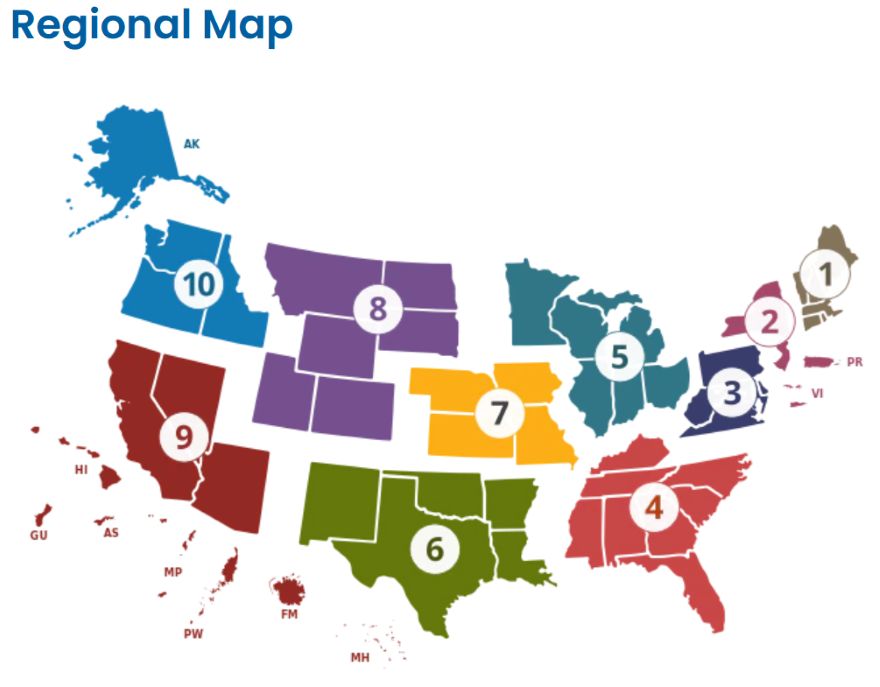
Graphic Source: U.S. Department of Health and Human Services
Put the Network to Work
In the months leading up to the World Cup, this national network focused on preparation for the tournament. Those sessions brought together partners from public health, emergency management, clinical teams, law enforcement and emergency medical services to explore a range of topics, including active shooters, vehicular attacks, bioterrorism and travel-related infectious diseases. One session focused on medical surge and health system load bearing with an expert from Minneapolis, who shared newly implemented strategies for management of tear-gas exposure.
When Real-Time Knowledge Matters
Much of this work is a response to the moment. Medical literature doesn’t operate on the same timeline as emergency preparedness. By the time you’ve done the study and written the paper, it may be yesterday’s problem. But bringing the right people together in real time to share experience and solve problems often gives us the best show we have in a crisis.
The World Cup now has come and gone, but Ebola continues to spread in Central and East Africa, the U.S. is experiencing a multi-state outbreak of Cyclospora, and future mass global events, including the Los Angeles Summer Olympic Games, loom on our horizon.
Strengthen Emergency Preparedness and Response
We need a strong commitment from federal and state health authorities to put in place the ongoing networks needed to highlight emerging risks, share information rapidly and coordinate effective action when threats inevitably arrive.
The World Cup crowds may have gone home, but the urgency of this work could not be clearer. Surveillance systems help us see threats. Learning and collaboration networks help us respond to them.
In an era defined by global interconnectedness, both are indispensable.
###