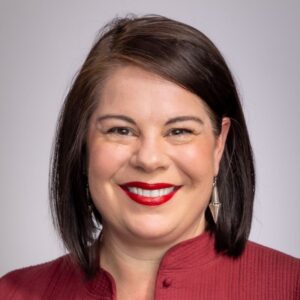
“These kids are our future community members; are you comfortable with people in your community not knowing how to read or do math?” says Abby Flores, teaching and learning coach, as motivation to educators at Lavaland Elementary.
Located in Albuquerque, New Mexico, Lavaland is a public school with nearly 400 students, comprising 92% Hispanic children; many of whom learned Spanish as their first language.
Flores, who wears a radiant smile, spots and greets many of the students by their first name. “How are we doing today, Jaime? Going to be a good day?” she suggests kindly. Jaime, a 3rd grader, stifles a smile and shrugs. “I like to give off ‘auntie’ vibes,” laughs Flores. “I build relationships with the students, and their teachers, so I can be effective – but I also hold boundaries when needed.”
Using Best Practices, In Every Classroom
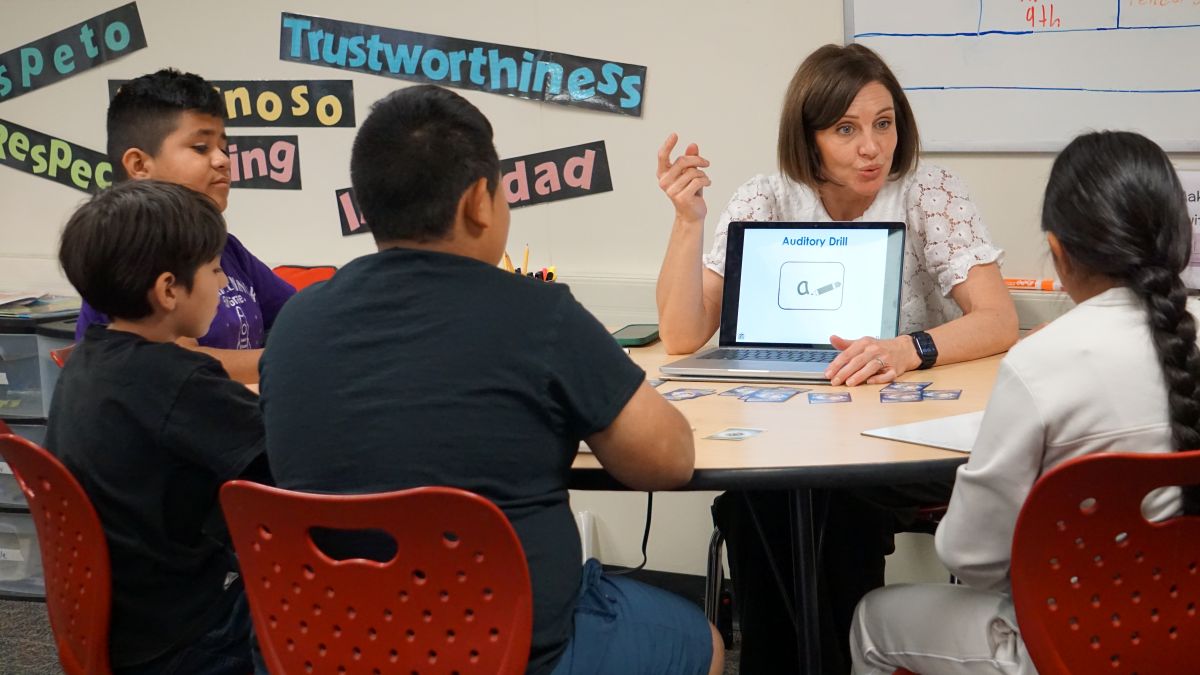
Abby Flores, teaching and learning coach at Lavaland Elementary, works with a small group of fifth graders on a literacy intervention. Image Credit: Kim Donoghue for Project ECHO, April 2026.
Flores is a specially assigned consultant; she’s charged with providing professional development and strategic interventions for the school. Flores is one of 60 coaches, across the Albuquerque Public School district, tasked to the most-struggling schools. And, according to scores last year, Lavaland’s kids are in need of that help: 21% were reading at grade level (or 1 in 5 students) – even worse, math ranked at a mere 5% for grades 3-5.
Thanks to special funding from the New Mexico Legislature, in 2026, Lavaland and Matheson Park Elementary are participating in the ECHO’s first-ever “whole school” program. That means, every teacher—in the entire school—is learning today’s best practices and getting the support they need from a community of experts – and their peers.
Today, Lavaland educators are learning how to help kids systematically encode and de-code letters and letter sounds, at the appropriate grade level, with the support of literacy experts and other teachers through the ECHO Program. And, the school has implemented a “sacred” 60 minutes of literacy instruction every day.
Making the Change Today for a Better Tomorrow
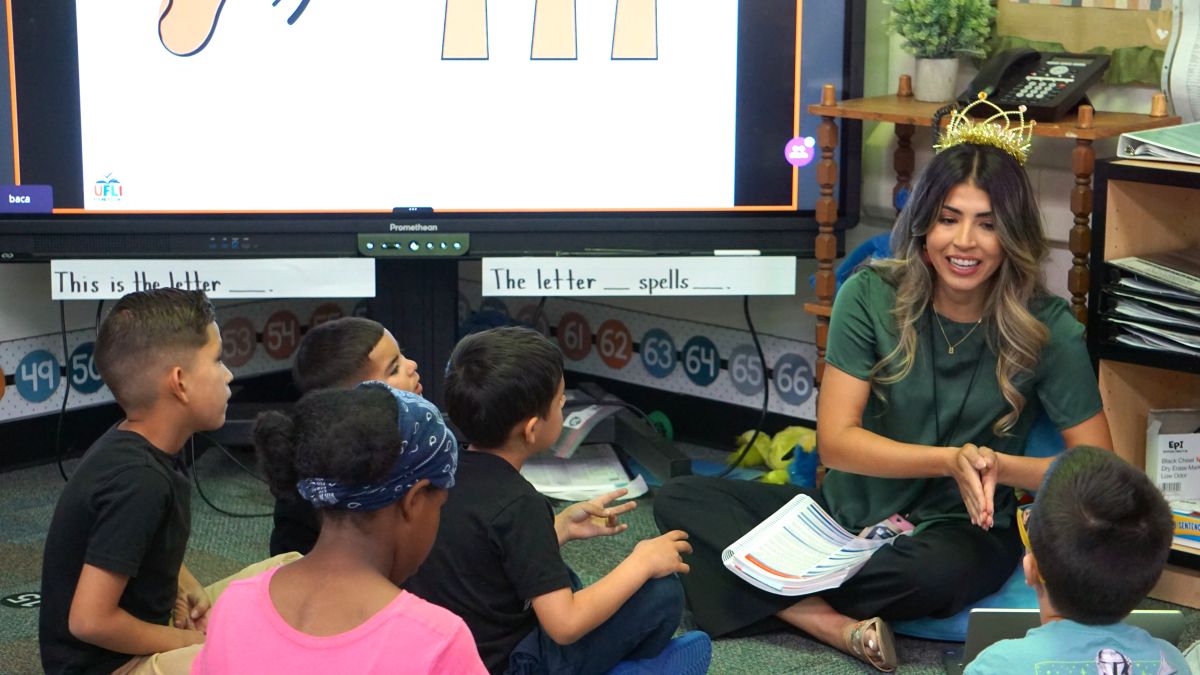
Alexis Baca, kindergarten and first grade teacher, uses what she learns through Project ECHO in small group interventions at Lavaland Elementary. Image Credit: Kim Donoghue for Project ECHO, April 2026.
On a Wednesday morning, Alexis Baca’s kindergarten class is full of wiggling, happy kids who put the bounce in “bouncing off the walls.” Settling them quickly, Baca gathers a small group around a large screen and puts on her “do not disturb” crown, signaling to the rest of the class to engage in quiet, tablet learning time, so she can focus on the handful of kids in front of her.
Letter sounds appear on the screen and the kids follow along attentively. Baca sees how they’re responding, and corrects, repeats phrases, or validates their effort, adjusting to each child’s needs. Baca repeats the lesson three times that morning, to ensure each child is learning effectively – a practice she recently instituted after observing it was more successful than teaching the whole class at the same time.
Reversing the Literacy Crisis, One School at a Time
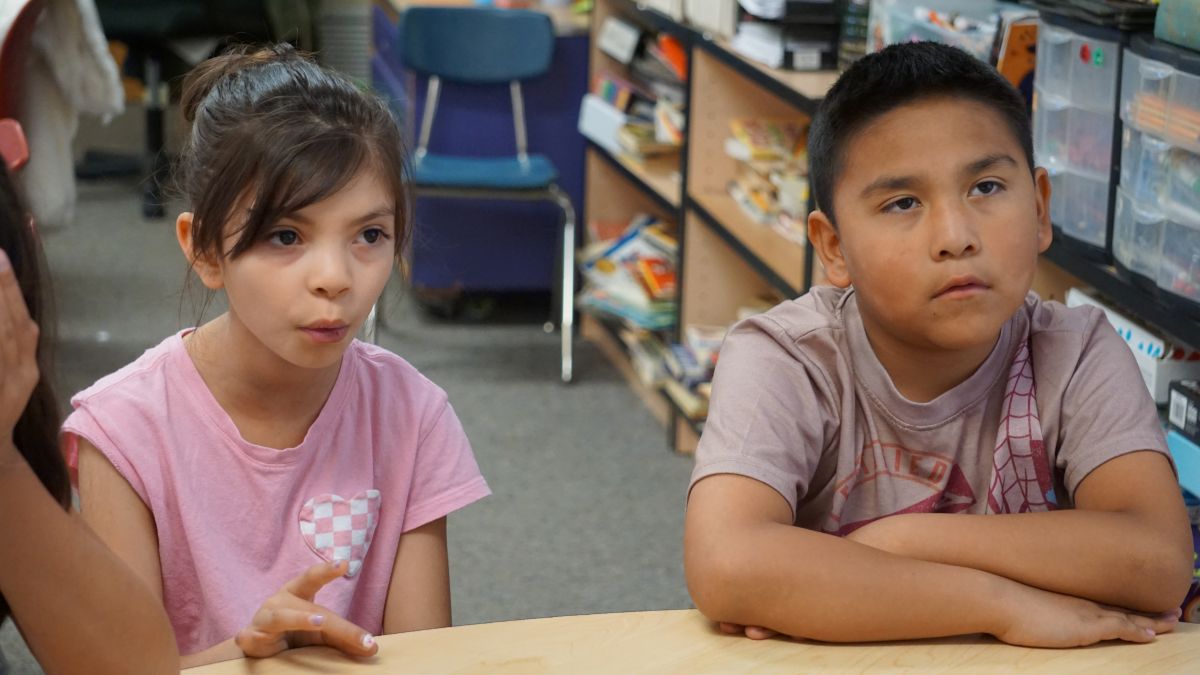
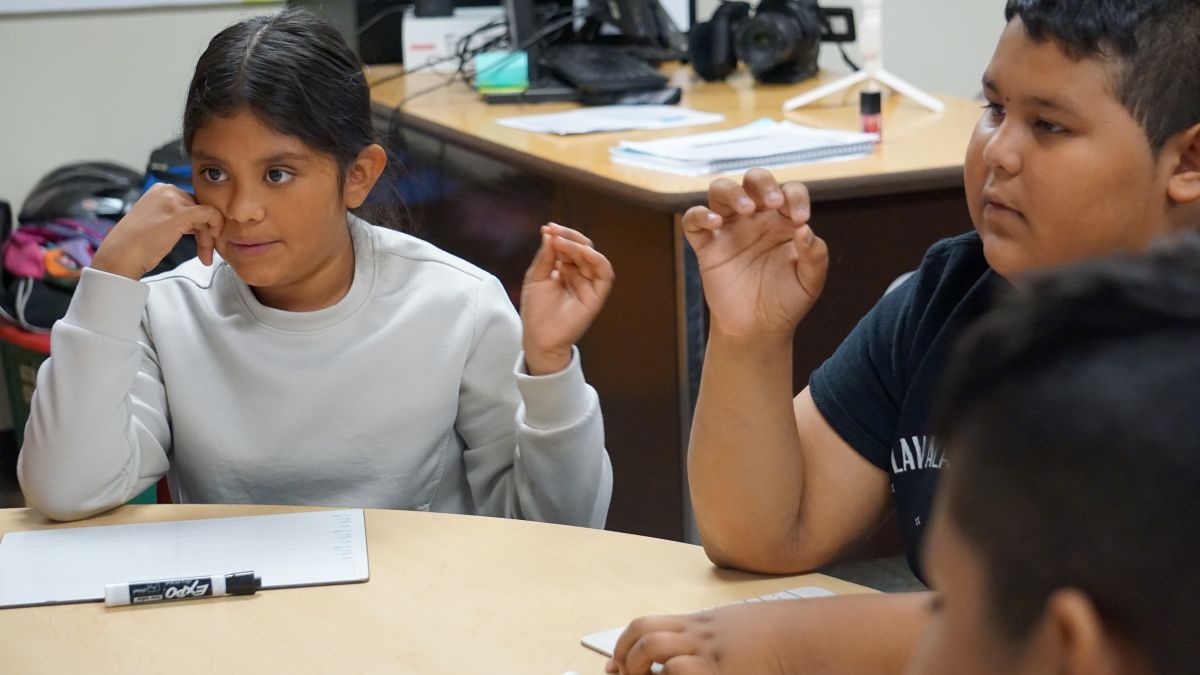
Third-grade students participate in their “Lava Literacy” class. Image Credit: Kim Donoghue for Project ECHO, April 2026.
With two decades of education experience, Flores knows first-hand how trends in teaching that are not based on evidence or research can have a devastating effect on our children. Twenty years of “whole language” learning has caused a literacy crisis in New Mexico, as well as nationally – with only 30% of American children reading proficiently or better.
Change is hard, but necessary. “Most teachers use the same techniques that they saw as students,” says Flores. “I’m not immune – I used to use the ‘three cueing’ method myself; now, I know that wasn’t helping my students really learn how to read.”
While the outcome of this year’s “whole school” effort is still in progress, today, Lavaland educators are making a positive impact in their students’ lives just through their willingness to learn, and to try, new and better ways of teaching.
To learn more about the “whole school” pilot project in New Mexico or education ECHO Programs, email the team.
Featured Image: Fifth-grade students at Lavaland Elementary (Albuquerque, NM) participate in a literacy exercise. Image Credit: Kim Donoghue for Project ECHO, April 2026.